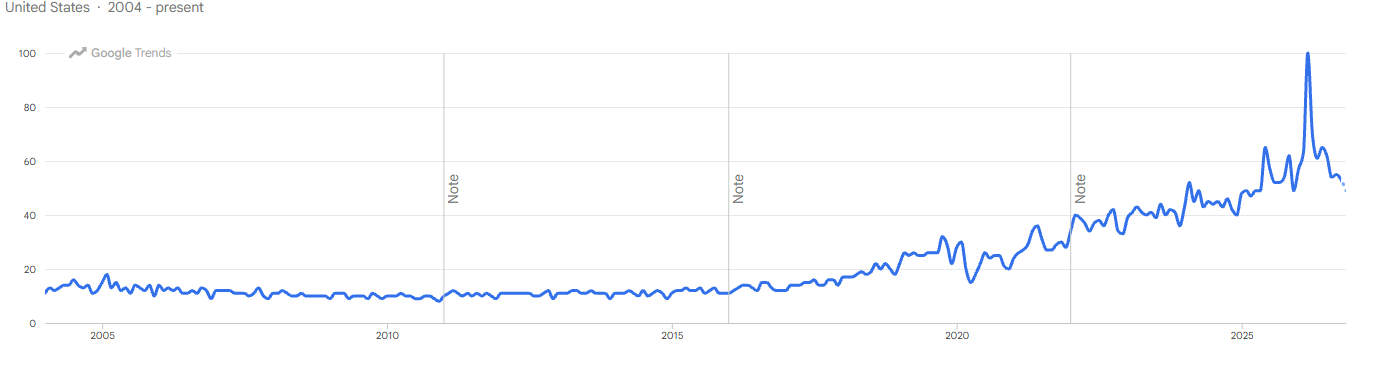
EMDR has become an increasingly popular therapy. Over the last couple of decades, it’s gone from an interesting tool to a mainstream therapeutic modality. However, what exactly does EMDR therapy treat? There are many claims out there from therapists offering EMDR, and social media is full of people touting EMDR as the cure-all for all kinds of mental health disorders.
We offer online EMDR therapy, and get many questions about what EMDR can treat. I want to cover what the research actually shows us. We’ll introduce the basics of EMDR before going into the research. This article will cover when EMDR is effective, when it might be effective, and where it has not been proven to be effective.
The Basics of EMDR
The history of EMDR is more recent than one might think. Dr. Francine Shapiro began investigating eye movements in 1987, publishing her paper The Efficacy of Eye Movement Desensitization Procedure in the Treatment of Traumatic Memories in the late 1980’s. This paper really founded EMDR as an intervention, specifically for those with trauma.
Over the years, Dr. Shapiro’s original technique has evolved. There are now eight phases of EMDR, or stages an individual moves through with their licensed therapist. The simple neuroscience behind EMDR is that the alternating stimulation replicates the rapid eye movement (REM) of sleep and helps us process memories. There are also many working theories related to the parahippocampal gyrus in the brain, using working memory to keep the mind and body in the present moment, and encouraging the two hemispheres of the brain to communicate.
To learn more about the eight phases, bilateral stimulation, and what to expect when you start EMDR therapy, you can read this article.

What Does Current Research Find?
I’ve separated out the research into two main categories. This is obviously oversimplifying the research, but serves to provide a basic understanding of what EMDR may be useful for. In the following section, we’ll dive into the research by mental health disorder.
What EMDR May Be Useful For
EMDR was originally developed to help treat individuals with trauma. Although it’s been adapted and used in many different scenarios, trauma really remains the best use case for EMDR. For those with adverse childhood experiences, trauma, or PTSD, EMDR is an effective treatment.
It’s also important to note that EMDR can be effective in individuals with different primary diagnoses related to trauma. Those with anxiety, depression, panic disorders, and phobias may benefit from EMDR therapy if there is a trauma component.
Where the Evidence Lacks
Although some therapists choose to offer EMDR for these disorders, research has not found it to be an effective intervention. This may change. The evidence here isn’t that EMDR is harmful or doesn’t work. As a relatively new therapy, we simply lack evidence showing it does work.
The common disorders people seek EMDR for that aren’t evidence-backed include OCD, substance use (addiction), psychosis, and bipolar disorder. When considering therapy for these conditions, we recommend considering other types of therapy first. For example, our online OCD therapy is ERP and CBT based as it has been proven to be more effective.
EMDR and PTSD
I can quote many different studies when it comes to PTSD, but suffice it to say EMDR is an evidence-based treatment for PTSD. This meta-analysis from 2026 looked at 65 studies. It found that EMDR has postive both immediate and follow-up effects on PTSD. It’s worth noting it did have some immediate effect on anxiety and depression as well. It also found that early interventions showed superior efficacy.
Another report looked at over 30 randomized controlled trials in both children and adults. It similarly found EMDR to be an effective treatment for PTSD. It also found that EMDR can improve symptoms associated with trauma such as anxiety, depression, and some cases of psychosis.
EMDR and Anxiety Disorders
When it comes to anxiety disorders, EMDR may help but is not the established first-line treatment. Other treatments, like CBT, are much more effective in research. A 2021 systematic review looked at EMDR for things other than PTSD. It did find a positive immediate effective for anxiety disorders, but less long-term effects.
Another review from 2017 found EMDR to be an effective treatment for those dealing with anxiety and trauma. As mentioned earlier in this article, EMDR is most effective at treating anxiety when it is related to PTSD. For those without any trauma, EMDR may be less effective.
EMDR and Depression
Much like anxiety, EMDR seems to work best for depression when it is related to traumatic memories. A meta-analysis found it may have potential benefits, but found multiple problems with the studies. These included heterogeneous designs, quality problems, and methodological limitations. With that being said, the early evidence is promising that EMDR may help depression, especially when it is related to past traumas.
EMDR and OCD
As awareness of OCD grows, so do treatment modalities. With multiple types of OCD, many people tout EMDR as an effective treatment. However, the same systematic review mentioned above found it to not be the most effective option. Although people experienced short-term positive outcomes, long-term effects were not as clear. EMDR was found to be less effective with OCD than many other conditions, and as such should not be considered a first-line treatment method until further research comes out.
EMDR and Substance Use Disorder
The research here is interesting. A 2025 meta-analysis looked at EMDR treatment for substance use disorder and found a few things. First, the researchers found moderate effects when it came to craving, PTSD, depression, and anxiety symptoms. However, there was no effect on overall addiction severity, and the long-term evidence was limited. As such, EMDR cannot be considered a first line treatment with addiction. It may help in cases related to trauma.
EMDR and Bipolar Disorder
A systematic review from 2018 explored EMDR treatment for bipolar disorder. It found “due to the few material available, it has been not possible to do a meta-analysis.” That is, there isn’t enough evidence or research out there. Claims that EMDR is effective for bipolar disorder should be treated carefully and with scrutiny.
How to Know if EMDR is Right For You?
The best way to know if EMDR is the right type of therapy for you is to meet with a therapist. They can help you consider EMDR vs CBT, EFR, Motivational Interviewing, and other types of therapy. Generally speaking, EMDR is best used to treat trauma and trauma-related symptoms. If you want to discuss if EMDR is right for you, use the form below to reach out to us.